Sign Up for Our Newsletter!
During The Union of Arab Banks forum
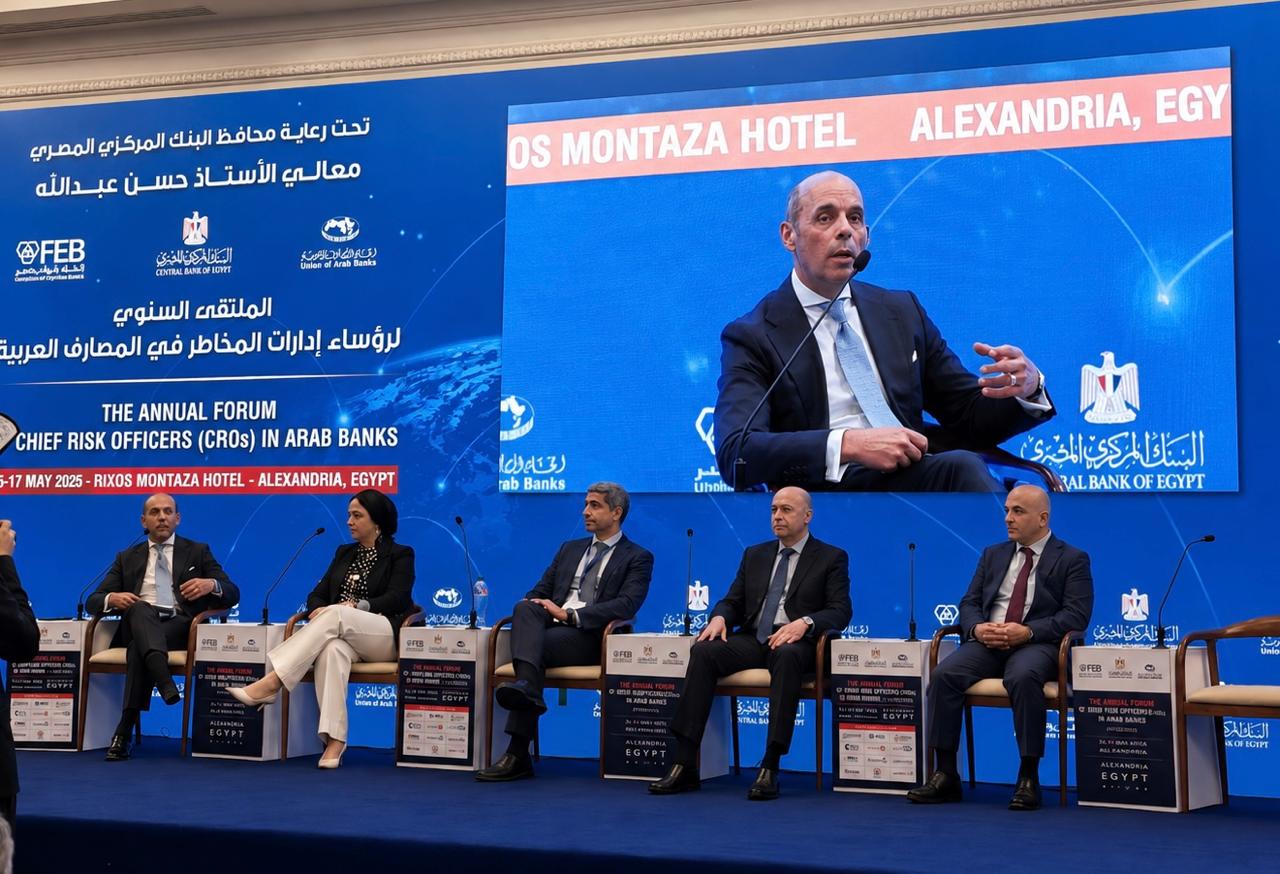
The United Bank CEO leads dialogue on The Strategic Leadership for Future Risks
Tarek Fayed – Chief Executive Officer and Managing Director, The United Bank
• Geopolitical transformations are reshaping the role of risk management.
• The Chief Risk Officer’s role is evolving from oversight to strategic partnership and decision-making.
• Artificial intelligence is redefining the future risk landscape.
• Sustainability and governance are reformulating the philosophy of risk management in a modern framework.
• Resilience is the key to sustainable institutional growth.
Cairo: May 18, 2026
The first day of the 8th Annual Forum of Heads of Risk Management in Arab Banks, organized by The Union of Arab Banks, witnessed extensive discussions and broad participation from banking sector leaders, policymakers, and economic experts at the local, regional, and international levels.
Under the title “The Strategic Transformation from Traditional Risk Management to Risk Foresight and Leadership,” Tarek Fayed, Chief Executive Officer and Managing Director of The United Bank, chaired a high-level panel discussion featuring Amani Abdel Moneim Hamida - General Manager of The Off-Site Supervision Sector at The Central Bank of Egypt, Marc Farag - Member of the secretariat of Basel Committee at the Bank for International Settlements in Switzerland, Dr. Rami Obeid - Senior Specialist at Qatar Central Bank and Ahmed Abdullah - Head of Risk Management at Emirates Development Bank in the United Arab Emirates.
At the opening of the session, Fayed emphasized that risk is no longer confined to the concepts of protection and oversight, however, it has become a mechanism for hedging, understanding the future, driving strategic decision-making, and building more resilient and sustainable institutions.
Fayed further explained that the world is witnessing rapid transformations and challenges, including economic and geopolitical changes, technological advancements, and the growing threat of cyber risks. These developments, he noted, have compelled financial institutions to redefine the role of risk management departments, transforming them from purely supervisory functions into key strategic partners in shaping the future.
The session also addressed several key topics, including:
• The evolving role of the Chief Risk Officer amid successive global crises.
• The adequacy of stress testing and early warning mechanisms.
• Integrating risk management into banks’ strategic decision-making processes.
• The role of artificial intelligence in reshaping future risks.
• The impact of ESG sustainability and governance standards on the philosophy of risk management.
• Mechanisms for addressing invisible risks such as cyber, geopolitical, and reputational risks.
The extended discussion explored the ability of financial institutions to move beyond a defensive risk management mindset toward forecasting and anticipating future risks through the development of early warning systems, strengthening institutional resilience, and transforming risks from potential threats into opportunities for growth and development.
The speakers in conclusion stressed that the future of the banking sector primarily depends on the efficiency of risk management and institutions’ ability to anticipate global transformations while maintaining a flexible strategic vision capable of adapting to a rapidly changing and increasingly complex world.